Abstract:

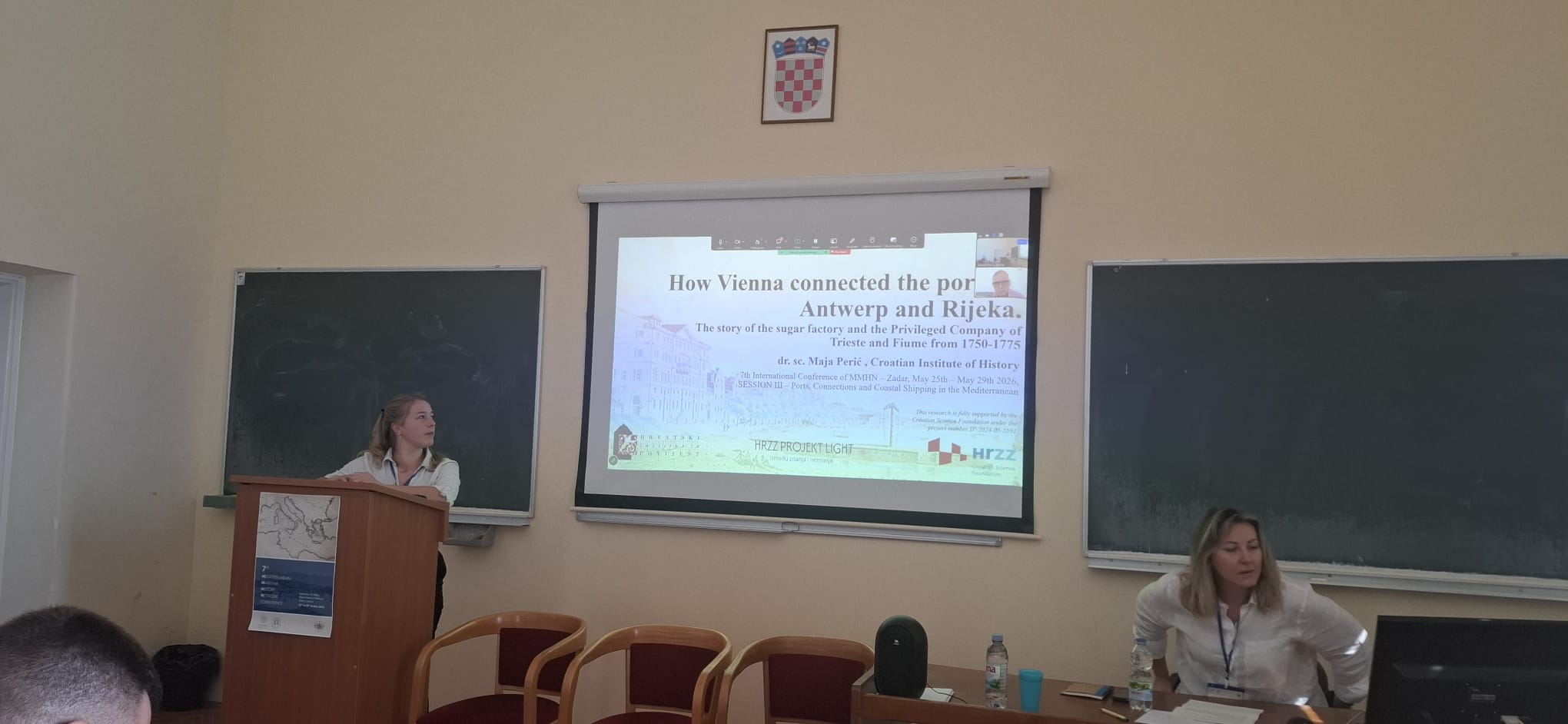
In 1750, with the support of the Viennese court and Maria Theresia, the free ports of Rijeka and Trieste were granted a patent regarding the import of various types of exotic products for consumption throughout the whole territory of the Habsburg Empire. The ports received specific privileges which meant among other things the exemption of taxes and tolls related to maritime trade and the Privileged Company of Trieste and Fiume was established.
One of the most important raw materials imported because of its status as a luxury product was sugar. Consequently, a sugar refinery was established in Rijeka, which became the most important maritime location for sugar production in the Habsburg Empire and in Southeastern Europe. The Viennese court carefully selected experienced leaders to manage the factory: wealthy merchants and bankers from Antwerp who invested in the Company and factories. In this way, Vienna succeeded in connecting two of its relatively distant regions within its territory, enabling the exchange of important commercial knowledge.
The connection between the sugar factory in Rijeka and its owners from Antwerp has remained in the background for a long time in historiography, and little detail has ever been given to the personal stories hidden in the many sources preserved in the archives. The Flemish people who worked at the factory in the port of Rijeka remained in contact with their families back home in the port of Antwerp through correspondence. It is therefore logically that these sources may reveal different aspects of daily life in the factory and Company. The main goal of this presentation is therefore to examine these connections between the two port cities belonging to the same empire, through the eyes of the people who played key roles in the daily life and organisation of the factory.
 We find it appropriate […] to promote the establishment of a Trading Company, which, by uniting its strength, knowledge, and care, will strive […] to develop the various branches of a necessary and profitable commerce.