Sažetak:

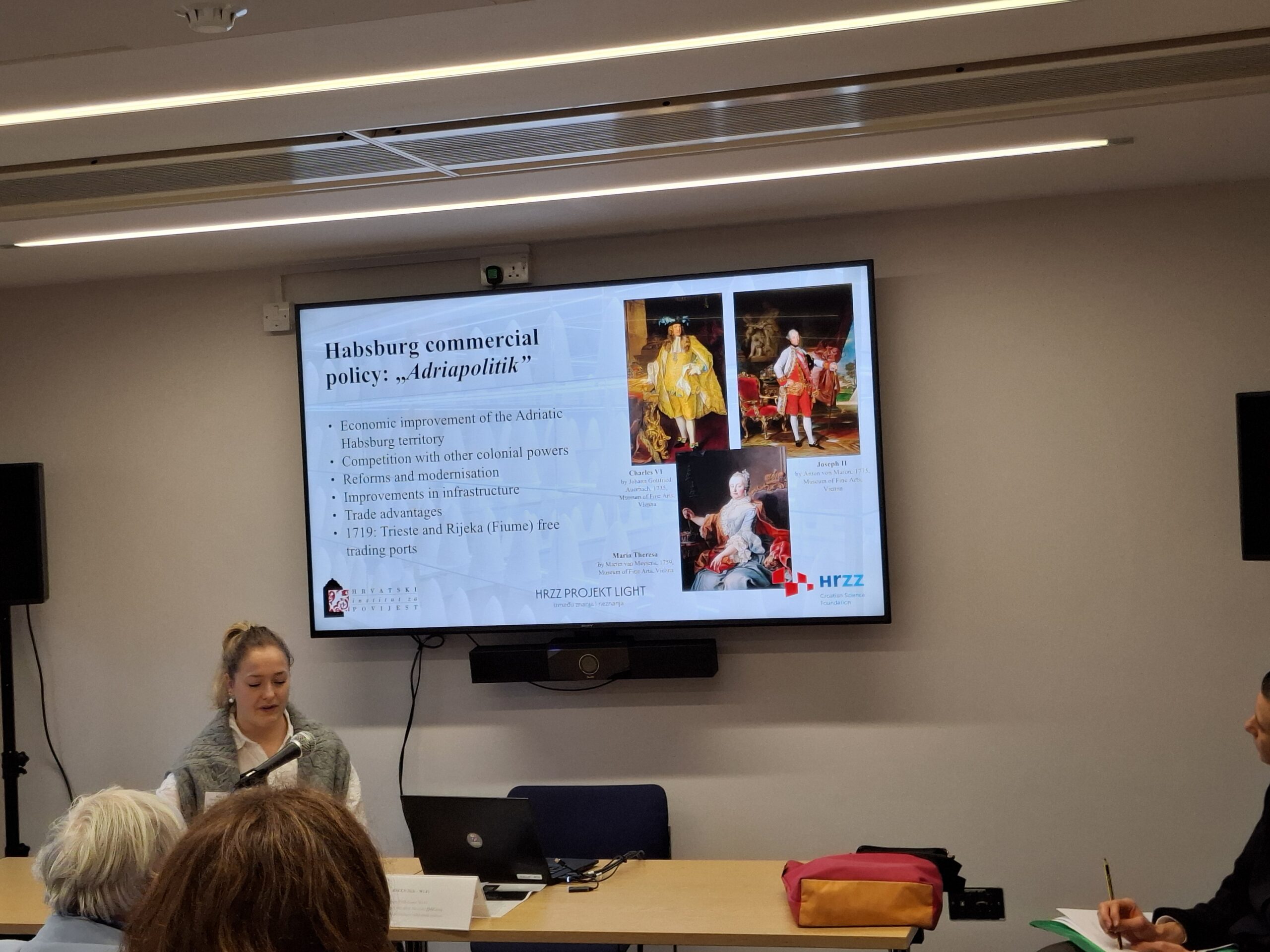
In order to reduce dependence on other colonial foreign trading powers for the import of exotic goods, the Viennese court under Charles VI and later under Maria Theresia introduced the so-called “Adriapolitik”. This meant especially investing in the commercial routes in their Adriatic territory and in 1750, the granting of a patent to the free seaports of Trieste and Rijeka to establish a monopoly without taxes and duties on the import of products such as sugar. Both free ports were connected through the foundation of the Privileged Company of Trieste and Fiume. The sugar factory in Rijeka consequently became one of the largest industrial complexes in Southeastern Europe. The establishment of this refinery was in line with the major economic strategies and reforms of the Habsburgs during the Enlightenment, with cameralism and the accumulation of capital clearly playing a central role in this case.
The factory was run by investors from Antwerp, which also illustrates the size and complexity of trade networks in the eighteenth century.
This presentation examines the contrast between, on the one hand, the large-scale strategies of mercantilist and cameralist reforms of the Viennese court in the wake of the Enlightenment and, on the other hand, the small-scale details of reality and the day-to-day organisation of the factory. A single grain of sugar thus connected micro-level archival traces with macro-level questions of imperial strategies, revealing how empires functioned not only on the basis of big plans but also through the smallest grains and characteristics of world trade.
 …smatramo prikladnim […] potaknuti osnivanje Trgovačkog društva, koje bi, ujedinjujući svoje snage, znanja i brižnost, nastojalo […] uzdignuti različite grane jedne nužne i korisne trgovine.